World Cup Fever Goes IRL: U.S. Live Experiences Surge 403% Ahead of 2026 Tournament
From Soccer-Inspired Art Exhibitions to 20,000-Person Watch Parties, Eventbrite Data Signals a Global Rush Toward In-Person Soccer Culture
This summer, the United States will become the center of the sports world. The World Cup 2026 is expected to bring an estimated 10 million visitors across 11 US host cities as the country marks its 250th anniversary, transforming the tournament into a once-in-a-generation sporting and cultural moment. With 48 teams, three host nations, and the world’s biggest sports audience converging at once, viewership records are expected to break. But fans aren’t just planning to watch, they’re planning to gather.
Eventbrite data reveals a major global rise in World Cup-themed experiences as fans increasingly seek ways to celebrate the tournament together in real life. Globally, World Cup-related events on the platform are up 111% compared to the most recent World Cup in 2022, with attendance rising 62%. The United States is driving much of that growth: U.S.-based events are up 403%, with attendance increasing 572%. The U.S. now accounts for more than half (68%) of all 2026 World Cup events on Eventbrite worldwide.
“The growth we’re seeing isn’t concentrated in traditional sports venues, it’s across nightlife, food festivals, concert halls, and places you’d never expect like bakeries, museums, arcades, bowling alleys, and boats to name a few,” says Andrea Parodi, General Manager of Eventbrite. “The World Cup is one of the few moments where the entire globe is synchronized: same match, same minute, billions watching at once. People are using that synchronization as a reason to find each other, whether they’ve followed a team for decades or never watched a match in their life. The tournament isn’t just creating soccer fans, it’s creating a global reason to gather in the real-world.”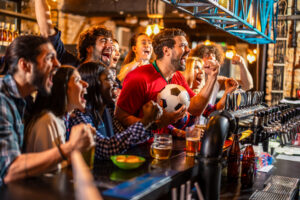
The Cultural Forces Reshaping Modern Fandom
- The Rise of Immersive Fan Identity: Sports fandom for younger demographics has shifted from passive consumption to active participation. Gen Z (40%) and Millennials (39%) are among the most likely to tune in, and they’re not planning to do it alone, they view match days as high-energy social spaces where they can dress up, chant, dance, and express their collective identity. This behavioral shift is driving a rapid diversification of events on Eventbrite, from soccer-themed fashion pop-ups and nightlife takeovers to interactive, experience-driven fan zones.
- The Decentralized Stadium Footprint: As premium tournament tickets remain out of reach for many fans, local entertainment venues, civic spaces, and organizers are stepping in to recreate live stadium energy. Eventbrite’s hyper-local data spikes reflect a sizable expansion of neighborhood-level hubs, like watch parties and community festivals, effectively democratizing the live tournament experience.
- The Antidote to Screen Fatigue: In an era dominated by isolated algorithms and solo streaming, the World Cup is a rare cultural exception. The 2022 tournament engaged an estimated 5 billion people, with 1.5 billion tuning into the final match simultaneously. This massive baseline of global synchronization explains why fans are treating 2026 as the ultimate reason to step away from their individual screens and living rooms and seek out shared, real-world community spaces.
Mapping the Momentum
From host cities to fan capitals, the momentum is showing up everywhere:
⚽ Atlanta’s World Cup event growth has skyrocketed 833% as fans flock to watch parties at Atlanta Eagles Arena, fan festivals, and soccer-centered community gatherings across the city.
🇬🇧 London has seen World Cup-related events grow 46% compared to 2022, with fans turning out for watch parties at pubs and rooftops, celebrating across one of the world’s most soccer-obsessed cities.
🌴 Los Angeles has seen World Cup-related events surge 920%, driven by fan zones, outdoor watch parties, and large-scale celebrations taking over iconic public gathering spaces like Union Station.
🔥 Miami, already one of the country’s strongest soccer markets, has seen World Cup-themed events grow 216% compared to 2022. Fueled by its international fanbase and vibrant nightlife culture, local creators are turning match days into waterfront viewing parties in Coconut Grove, South Beach fan festivals, and mega yacht after parties.
🗽 New York City has emerged as one of the world’s fastest-growing World Cup markets, with local events up 546% compared to 2022. From street festivals and watch parties aboard Hudson River cruises, the city is quickly becoming a global center of World Cup fandom.
🍁 Toronto has seen World Cup-related events grow 455% compared to 2022, with community-driven celebrations like the city’s “100 Days to Go” festival in March, and an 8-day ultimate soccer fan experience at BMO Field are transforming fandom into large-scale civic gathering.
🚇 Washington, D.C. World Cup-related events are up 600%, with creators building increasingly creative and hyperlocal experiences. Fans can watch matches inside Metrobar, a retired Washington Metro railcar converted into a functioning cocktail lounge, or attend themed viewing parties featuring DJ sets and prizes for best dressed.

Why It Matters
For younger generations raised in an era of fragmented streaming and personalized algorithms, the World Cup represents something increasingly rare: a synchronized global experience happening in real time, together.
What Eventbrite’s data suggests is that the future of fandom is becoming increasingly participatory. Fans don’t just want to consume culture, they want to physically enter it. Whether through neighborhood watch parties, sold-out fan festivals, or themed nightlife events, the World Cup has evolved into one of the largest engines for real-world gathering on the planet.
And as momentum accelerates, one thing is becoming clear: the biggest moments of the tournament may not happen only on the pitch, but everywhere people come together side by side, igniting a historic wave of human connection right in our own backyards.
###
Methodology: Analysis of Eventbrite platform data comparing the six months leading up to the 2022 and 2026 World Cups: May 21–Nov. 20, 2022 and Dec. 11, 2025–June 10, 2026. Data includes hosted, in-person events containing “World Cup,” or “worldcup,” in the title, description, or tags. Metrics analyzed include event volume and attendance globally, within the U.S. and U.K., and across key cities. Analysis conducted June 10, 2026.